What to see
Waiheke Island is the easy day trip, a 40 minute ferry from downtown to vineyards, olive groves and swimming bays. The west coast beaches at Piha and Karekare have dramatic black sand and strong surf. The Waitākere Ranges behind them are dense native bush with waterfalls and lookouts over the Tasman Sea.
- Waiheke Island for wineries and beaches
- Piha and Karekare for black-sand surf beaches
- The Auckland Domain and War Memorial Museum
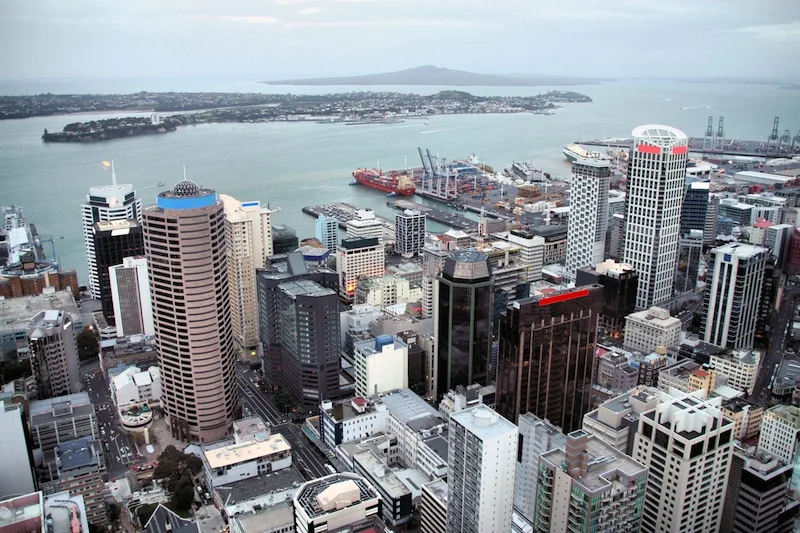
- Rangitoto Island, a young volcano you can climb in half a day
Getting around
The city centre, ferries and museums work well without a car, and ferries are the nicest way to reach the islands. For the west coast beaches and the ranges you really need a car, as public transport is thin out there. Piha is about 40 minutes from the centre on a winding road. Auckland traffic is heavy at peak times, so avoid driving across the city around 8am and 5pm.
When to go
Summer is warm and good for the beaches and harbour, though that is also when the city empties out and locals head to the coast. An old forum thread asked about Auckland in September, and the honest answer is that early spring is mild but changeable, fine for sightseeing if not for swimming. Auckland is famously rainy across the cooler months, so pack a jacket.
Honest notes
The west coast surf beaches have strong rips and are not always patrolled, so swim between the flags and take them seriously. Waiheke can get expensive once you add ferry fares, wine tastings and lunch, so set a budget. To protect the kauri trees from dieback disease, clean your shoes at the stations on the Waitākere tracks, and note some tracks stay closed.
Costs and practical tips
Fullers360’s Auckland–Waiheke Standard adult return costs NZ$65. Priority, Reserve, off-peak and concession tickets have different conditions. This commercial ferry is outside AT bank-card contactless payments; use an accepted HOP card or an operator ticket.
- Use an AT HOP card for cheaper fares on city buses, trains and ferries
- Mission Bay and Takapuna are the easy swimming beaches close to the city
- Devonport, a short ferry across the harbour, makes a relaxed half day
Nearby options
If you have more time, the Coromandel Peninsula is about 2 to 2.5 hours southeast for Cathedral Cove and Hot Water Beach, where you can dig your own hot pool in the sand at low tide. North of the city, the Matakana area has weekend markets and beaches within about an hour, and Tāwharanui Regional Park has a fine open coast.
Good to know
Auckland is the usual international arrival point, with the airport about 30 to 45 minutes south of the centre depending on traffic. A car is not needed for a city-only stay, but it opens up the beaches and ranges. The weather is mild but changeable, with rain possible any month, so carry a light jacket. Tap water is safe and cards are taken everywhere, so you need little cash.
Cities & towns
Editorial responsibility: NarodNZ. We maintain this independent guide and welcome corrections. Send a correction